80% of our vegetables, 100% of our meat
Food independence is the slowest system to build and the one people most want to start with. What we grow, what we still buy, and why the last 20% is not worth chasing.
Energy and water are engineering. You size them, install them, and they work. Food is agriculture — it answers to weather, soil biology, pests and your own attention span. It is the only system on the homestead that cannot be bought and commissioned in a fortnight, which is exactly why we sequence it last and start it early.
Three seasons in, our household grows roughly 80% of the vegetables it eats and produces all of its own meat. Neither number arrived by accident, and neither is as impressive as it sounds until you know what sits behind it.
Protein is the easy win. Nobody believes this.
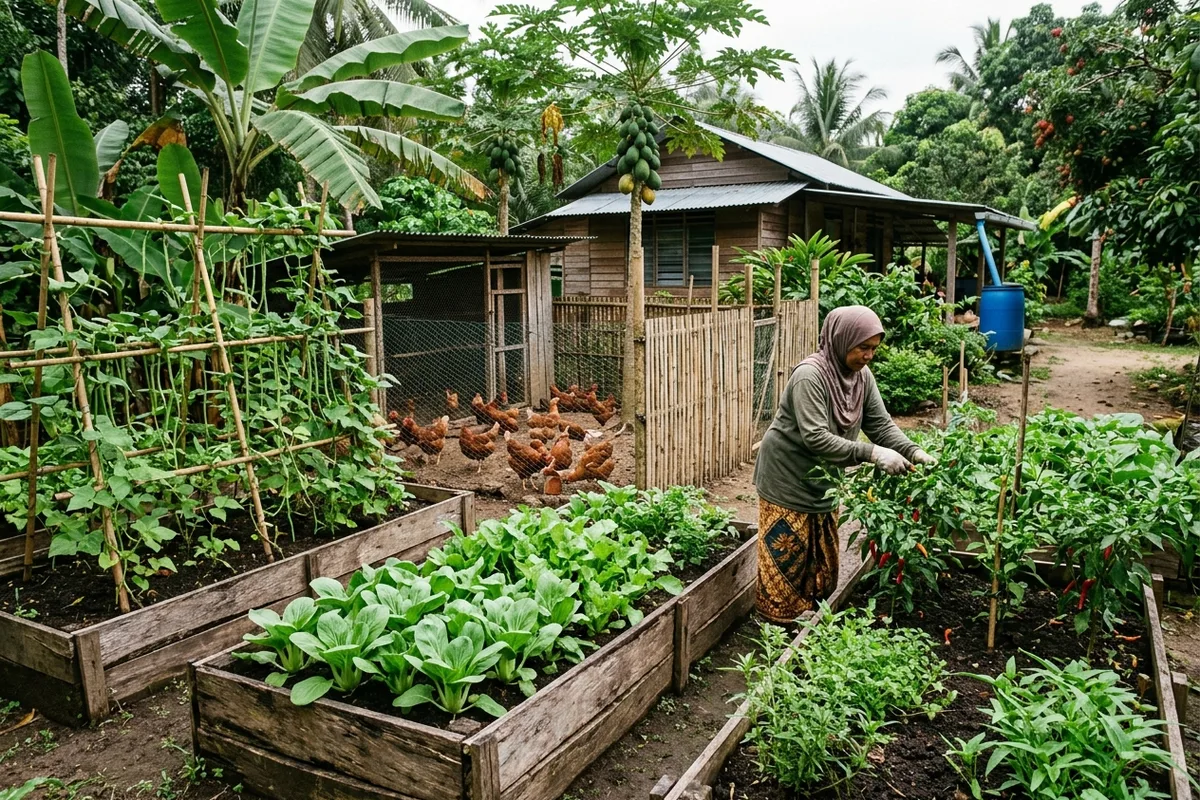
New homesteaders spend their first year on vegetables and their fifth wondering why they still buy chicken. It is the wrong order. Poultry reaches full self-sufficiency faster than any crop: birds convert kitchen scraps and forage into eggs and meat within months, they need a secure coop rather than fertile soil, and they improve the ground they range over.
Reaching 100% of meat took one season, mostly spent learning to build a coop that a monitor lizard cannot open. Reaching 80% of vegetables took three.
Start animals in year one and gardens in year one. Expect the animals to pay off in year one and the gardens in year three.
The tropical growing problem
Malaysia gives you year-round growing and takes back almost everything a temperate gardener relies on. There is no winter to break pest cycles. Heavy rain splits fruit, spreads fungal disease and leaches nutrients out of open beds within weeks. Bare soil in full sun dies.
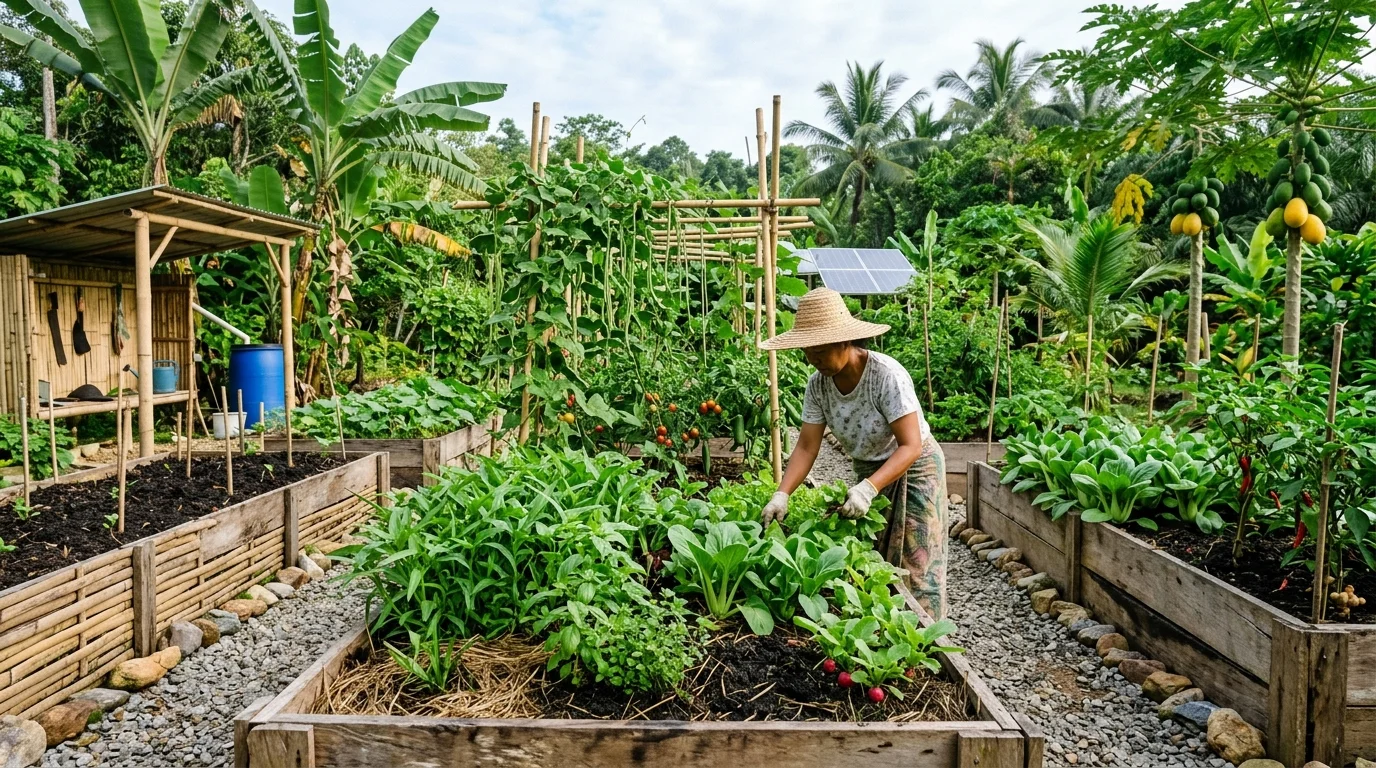
What has worked for us is unglamorous: covered growing structures to keep rain off leaves, permanent mulched beds instead of tilled rows, and heavy reliance on crops that actually like this climate. Sweet potato, kangkung, okra, long bean, ulam herbs, banana, papaya, tapioca and pandan carry the calendar. Temperate favourites — broccoli, carrots, most lettuces — are a hobby here, not a food supply.
Why we stopped at 80%
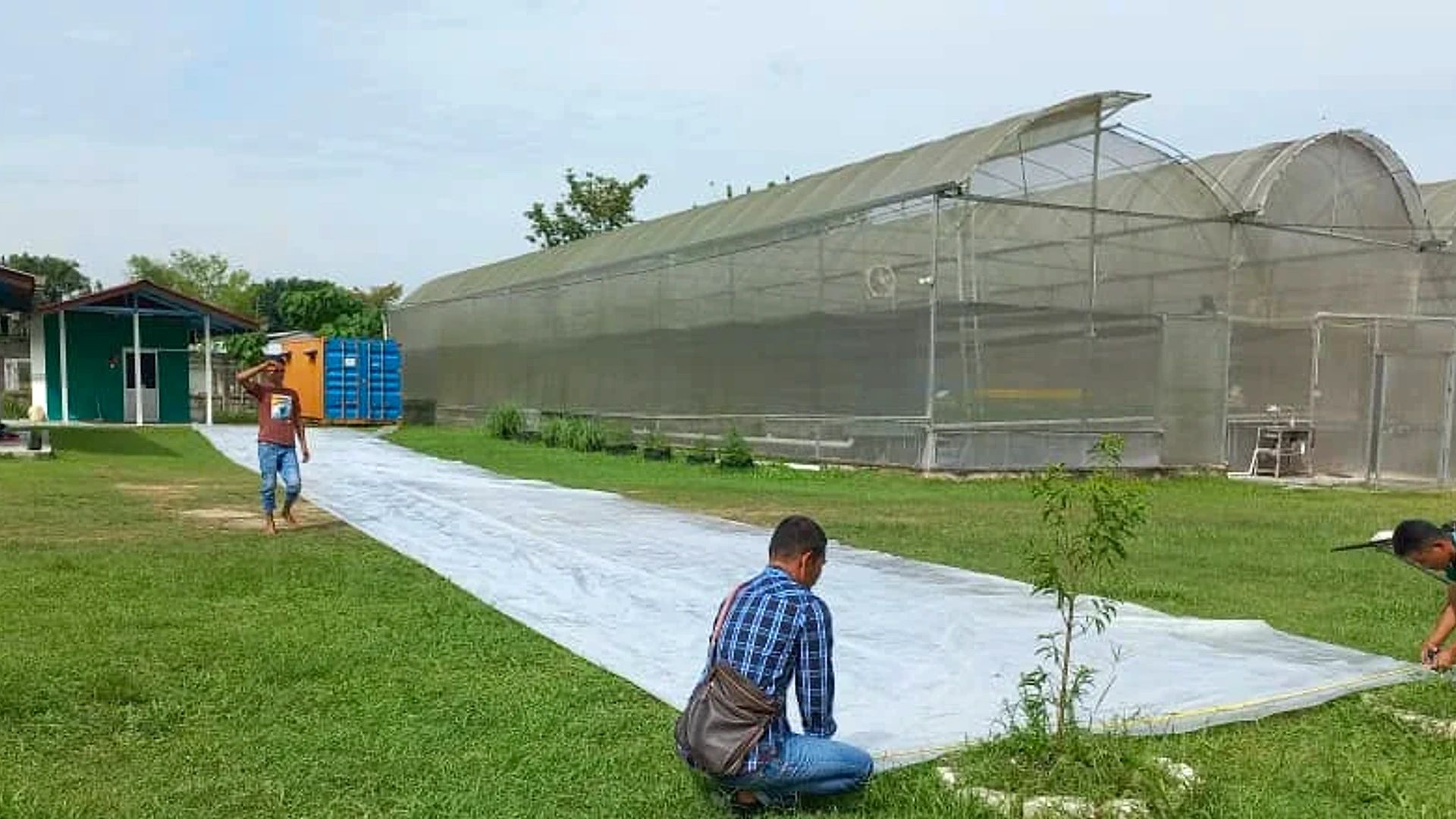
The last fifth is the expensive fifth. Closing it would mean cold storage, far more covered area, and a labour commitment that competes with the actual work of the household — all to replace vegetables that cost a few ringgit at the morning market twenty minutes away.
We still buy rice, cooking oil, flour and the occasional out-of-season vegetable. That is a deliberate decision, not a failure. Independence is about removing fragility, not achieving purity: a household that grows most of its food, produces its own protein and can go weeks without a supply run is already outside the failure modes that worry people.
If you are starting this year
Build the coop before the beds. Fastest return on the homestead, and the manure feeds everything that follows.
Cover something. Even a small rain shelter over two beds changes what you can reliably harvest.
Plant the trees now. Banana and papaya produce within a year; anything slower only gets later the longer you wait.
Grow what wants to be here. Fight the climate on two beds for fun, not on twenty for dinner.
Food sits at the end of a chain that starts with water and access — see five months from palm scrub to livable for how it fits into the build.
Want to know what your land can feed?
Soil, slope, sun and water decide what is realistic. We'll tell you what to plant, where, and in what order.
Book a consultation