Independent systems engineering for the Malaysian climate.
Beyond The Grid is an independent off-grid engineering and advisory firm. We bridge the critical gap between raw agricultural land, specialized engineering disciplines, and local construction contractors — delivering resilient, autonomous private client homesteads across Peninsular Malaysia.
Empirical engineering, verified in the field.
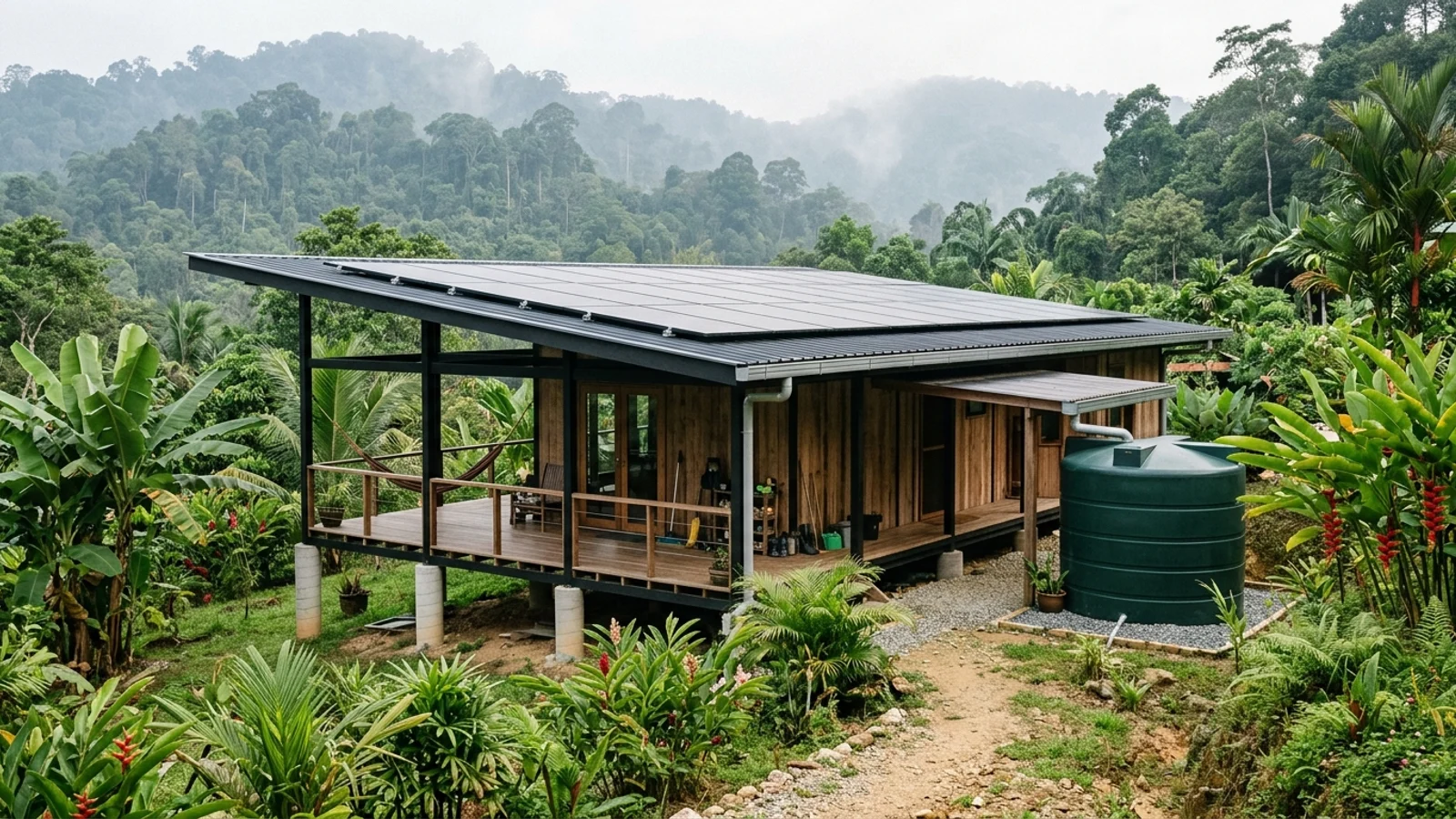
From raw agricultural terrain, our engineering team delivered a private hillside client homestead that produced its own food, harvested and stored gravity mountain water, generated autonomous solar power, and maintained resilient poultry systems — subsequently handed over to new ownership as a proven operational model.
We engineered it rapidly because sequencing matters more than budget — achieving full operational autonomy and documenting every technical metric. That rigorous, field-verified track record is what protects our private clients from contractor miscalculations and costly trial and error.
That empirical engineering track record is what you get when you engage us: vendor-neutral advisory, validated bill of quantities, and zero guesswork on your investment.
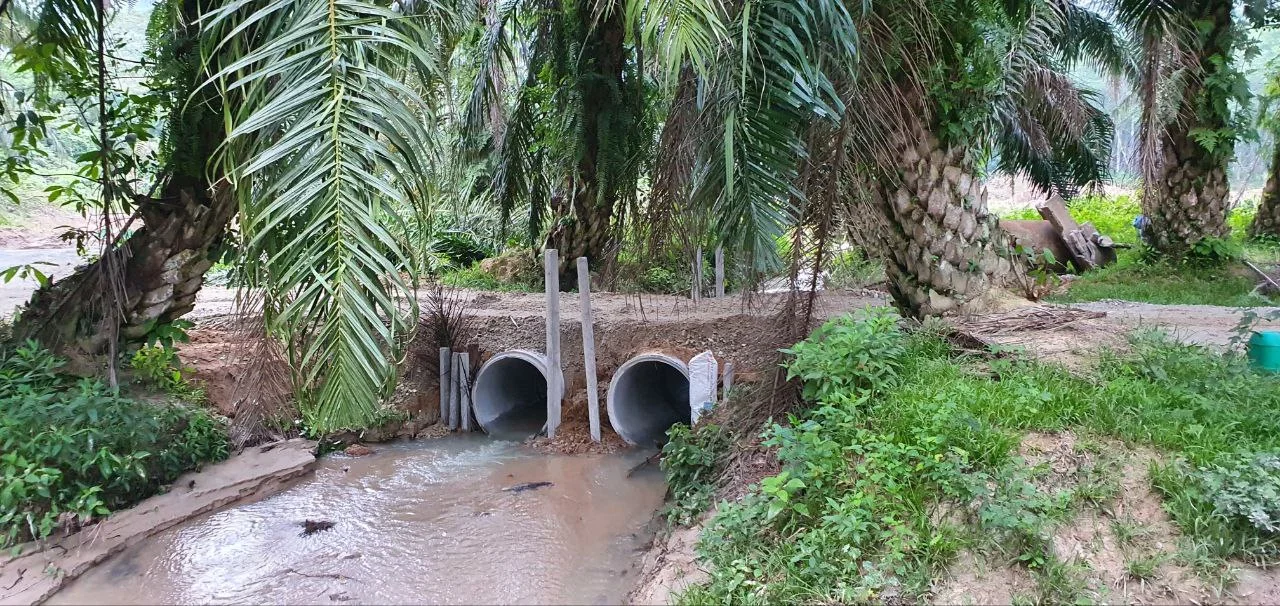
Dual 900mm concrete culverts and headwalls installed to secure all-weather access across the stream.
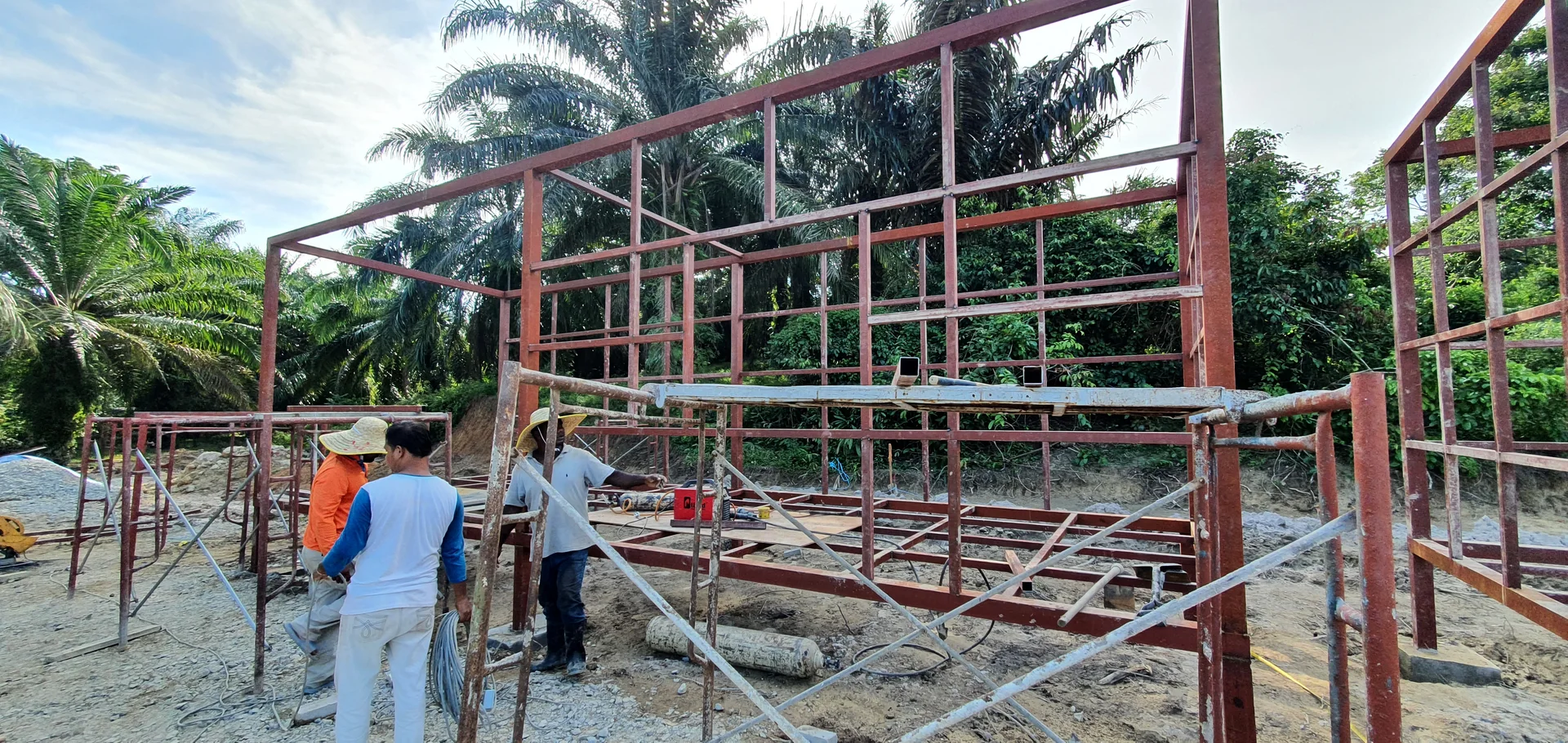
Permanent steel frame erected on pad footings before wet weather sets in.
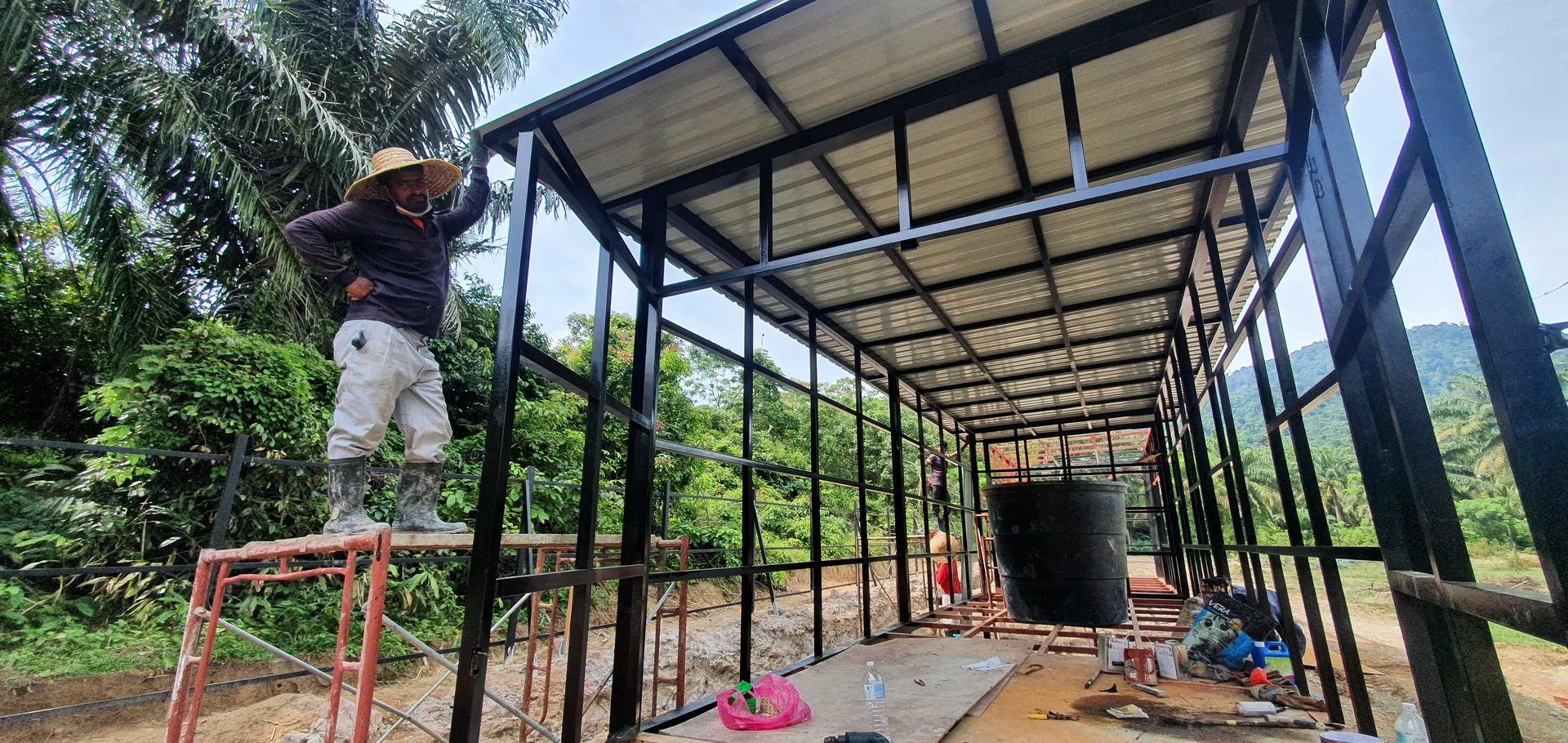
Insulated roofing, water storage support, and weather envelope completed on site.
The regenerative economy.
Going off-grid isn't a spreadsheet of panels and batteries. It's a spiritually-grounded way of living that gives back more than it takes — to the land, to your household, to the people around you.
Real independence means resilience against fragile utility, food and financial systems — and a life that keeps regenerating, season after season. That belief runs through everything we help people build.
Our Multi-Disciplinary Advisory Network.
Rather than maintaining costly overheads or hardware sales commissions, Beyond The Grid coordinates a specialized network of certified engineers and proven field contractors across Peninsular Malaysia — each handling their domain with empirical precision.
Solar PV & Storage Engineers
SEDA-trained microgrid specialists designing standalone solar arrays, LiFePO4 battery racks, and hybrid generator failovers sized for monsoon cloud cover.
Hydrology & Water Engineers
Specialists in stream weir intakes, gravity-flow head pressure calculations, sediment settlement tanks, and potable UV/carbon multi-stage filtration manifolds.
Civil, Earthworks & IBS Partners
Vetted rural contractors for heavy machinery track cutting, culvert crossings, pad footing foundations, and modular light-gauge steel/container assembly.
Tropical Agronomists
Permaculture and regenerative soil planners managing clay conditioning, bio-secure poultry coops, fruit orchards, and monsoon-hardy vegetable raised beds.
A regenerative economy, owned by the people who will live in it.
This one does not exist yet, and we would rather say so plainly. What we are building toward is a network of off-grid households in Malaysia who each hold their own land and run their own systems — but buy, build, learn and trade together.
One homestead is self-sufficient. A dozen of them, within reach of each other, is an economy. Right now we are looking for the first few households who want to be part of building it.
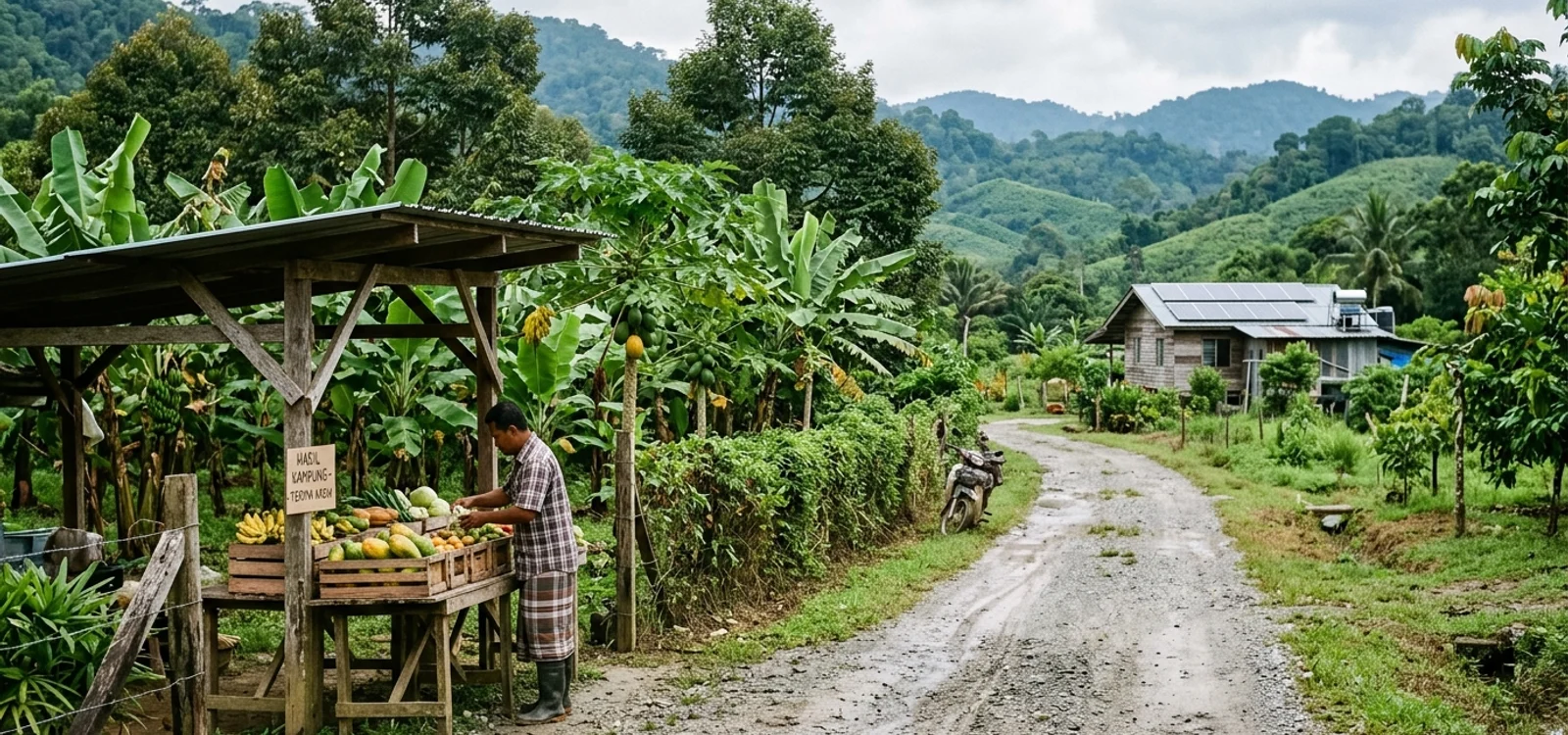
The systems we all rely on were built for a calmer century.
You do not need to believe in collapse to see the direction of travel. Food arrives from further away each year. Energy prices are set by events on other continents. Rain comes harder and less predictably. Land near cities is priced as an asset, not as somewhere to live.
None of that is solved by one family with solar panels and a vegetable patch. It is solved by enough households, close enough together, producing enough between them to stop depending on any single fragile line.
Imported dependence
Malaysia imports a large share of what it eats. Every shipping disruption becomes a price shock on your table.
Someone else's switch
Tariffs, subsidy changes and outages are decisions made far above you — unless you generate your own.
Feast, then drought
The tropics are not short of rain. They are short of storage. Catchment turns a wet month into a dry-season supply.
Priced as a bet
Held collectively for use rather than resale, land stops being speculation and becomes infrastructure.
Three things would be shared. Everything else stays yours.
This is the model we intend to build, and the part founding households will have a say in shaping.
Shared land
Parcels bought and held collectively for regenerative use — neighbouring plots, shared access roads, pooled negotiating power with sellers.
Shared systems
Bulk equipment orders, shared machinery, a common pool of trusted trades, and backup capacity when one household's system goes down.
Shared trade
Surplus eggs, produce, timber and labour circulating between members first — and reaching outside buyers as one supply, not twelve.
Where this goes, and where we are.
Four stages, and we are honestly at the first one. Nothing here is a share offer or a promise of return — it is an invitation to help build something that does not exist yet.
Register your interest →- —To own land yet
- —Farming or building experience
- —To move off-grid immediately
- —To commit money at this stage
Find the founding households
Gathering the handful of families who genuinely want this — not the curious, the committed. Register your interest and we will bring you into the conversation as it forms: what we are learning, what land we are looking at, what we get wrong.
Meet on the land, work a season
Interested households join technical site visits to completed and active client project sites, inspect working microgrids and gravity systems, and evaluate real-world operating conditions across wet and dry seasons.
Secure the first cluster
Neighbouring plots identified and bought, each household on its own title, with shared access and shared infrastructure designed in from the start rather than retrofitted. Founding households shape how the common ground is governed.
Formalise, then keep carrying the next one
Once there is real land and real households, the co-op gets properly constituted and registered, with surplus produce trading as one supply. From then on the obligation reverses: every household gives days, tools and knowledge to the one arriving after them. That is the whole mechanism.
Start your own plot. Grow into something bigger.
Book a consultation and take the first honest step toward a life the grid can't switch off.
Book a consultation